Thursday, February 24, 2022

Psychiatry should not fear the introduction of CRPD compliant services

Peter McGovern argues in a BJPsych article that rights and recovery-orientated services should be at the centre not the margins of psychiatry (see my twitter thread with quotes or amended quotes from the article). As the event details of the upcoming conference mentioned in my last post say, Mental Health Act reform needs to comply with the Convention on the Rights of Persons with Disabilities (CRPD) (see eg. previous post). CRPD recognises and promotes the use of supportive rather than substitute decision-making (see eg. another previous post). 

The introduction of Seni’s law (see previous post) should encourage learning from incidents where services have had to resort to the use of force. Psychiatrists must stop endorsing traumatic clinical practice and coercing people into complying with treatments they may actually not find very helpful (see eg. previous post and yet another).

Sunday, February 06, 2022

What does it mean that mental health has got worse in the pandemic?

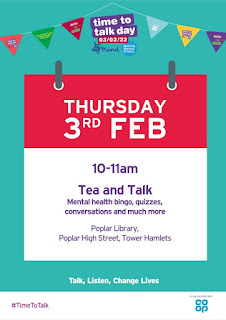
I thought I’d join what’s called the nation’s biggest mental health conversation, following Time to Talk Day recently. A survey in the East of England found that more than one in 6 adults who say their mental health has got worse during the pandemic have not spoken to anyone about it (see East Anglian Daily Times article). I suppose we shouldn’t be too surprised that 38% of respondents report a worsening of their mental health during the pandemic. As I said in a previous post, the impact of the pandemic should not be underestimated. The viral illness has led to deaths, together with lockdowns to prevent deaths, which have caused significant grief and disruption.

Lucy Foulkes, in her book Losing our Minds (see my review), notes how the conversation about mental health changed even before the pandemic. For example, Time to Change was a social movement, led by Mind and Rethink between 2007-21 to alter the way people think and act about mental health problems. Similarly, the Heads Together campaign of the Royal Foundation of the Duke and Duchess of Cambridge is typical of these kind of initiatives aimed at reducing stigma and discrimination about mental health problems by encouraging people to talk about them. But as Lucy Foulkes points out, despite these campaigns there is still limited understanding of what mental disorders are, what causes them and how they are treated. 

As the Beatles said in their song ‘Help!’, we may well need someone when we’re not feeling so self-assured. But although the NHS promotes this song in its mental health campaign (see my tweet), I’m not convinced that people should necessarily be looking to the NHS when they feel so insecure. After all, the Beatles did say “Help! Not just anybody. Help!” [my emphasis]! Not that a suitable therapist may not be the right person to go to in such a situation. But someone else outside of services may be as well. We all need others at times. We might have more resources to be able to deal with our problems than we think. In fact it may not make much sense even to see dealing with the stresses and strains of life as a mental health problem. A lot of what mental health professionals actually do is help people understand and deal with their difficulties. People might just need pointing in the right direction if they can't make progress sorting out their problems without coming to services. That doesn’t necessarily require a commitment to undertake a personal therapy or the taking of medication.

Although there may not be a clear dividing line between normality and mental disorder, not all negative emotions and experiences should be labelled as mental disorder. Over recent years there has been a considerable increase in numbers of people seen by mental health services. But this rising demand does not necessarily reflect increasing need. Mental health services should prioritise those with the most need. In fact they seem reluctant to admit this. All I'm trying to do is help develop a better narrative. Although it has become common to blame the pandemic for long waiting lists and difficulty in accessing services, overmedicalising stress and unhappiness does not necessarily help (see previous post). I do worry about the rather oversimplistic message that services seem to be giving to people at times (see previous post). It seems counter-productive. Hopefully the pandemic will actually help us deal with these issues better.

Wednesday, January 26, 2022

Use of force in mental health services

Seni's law, also known as the Mental Health Units (Use of Force) Act 2018, will come into effect on 31 March 2022 (see Mind press release) . The government published guidance at the end of last year to support its implementation. 

As the guidance says, "For too long the use of force has been accepted as the norm in many mental health services". People’s dignity and their civil and political rights must be respected. Although there may be circumstances in which it may be difficult to avoid the use of force, any compulsory treatment should only be used as a last resort after all other treatment and non-treatment options have been considered and excluded, and only when needed to prevent serious and imminent harm to people (see previous post). The aim should be to eliminate seclusion and segregation (see previous post). Restraint, including chemical restraint, needs to be regulated (see eg. previous post). Progress in removal of compulsion should be compliant with the UN Convention on the Rights of People with Disability (CRPD) (see eg. yet another previous post). 

NHS and independent hospitals must appoint a 'responsible person' to produce a policy to reduce the use of force in mental health units and collect data on any use of force. These figures will be published nationally. Staff must receive appropriate training. Hospitals have been given time to ensure Seni's law is implemented and I look forward to seeing its impact in reducing coercion.

Wednesday, January 12, 2022

Reaction against the neo-Kraepelinian approach

Jerome Wakefield has an article in World Psychiatry on the 'credo' of nine propositions of the neo-Kraepelinian movement. One of my articles examined the same nine assumptions from the hypothetical critical point of view of Adolf Meyer. 

I agree with Wakefield that Robert Spitzer, Chair of the DSM-III taskforce, should not necessarily be seen as a typical neo-Kraepelinian. Spitzer was very clear that, from his point of view, DSM-III was atheoretical (see eg. previous post). I also agree with Wakefield that Spitzer was concerned to counter anti-psychiatric critiques (see eg. another of my articles), particularly the study by Rosenhan (1973) 'On being sane in insane places' (see previous post). The subsequent DSM-5 has of course failed (see eg. previous post).

Where I think Wakefield may have missed a point is that Klerman anticipated a neo-Meyerian revival. He does mention that Klerman noted there was bound to be "a reaction against what will be perceived as the [neo-Kraepelinian] movement’s excesses”. As I said in my 1990 article, this response has been "slow to be formulated". I’ve always argued that critical/relational psychiatry is a neo-Meyerian position in psychiatry (see eg. my talk). 

Wednesday, January 05, 2022

In defence of the human being

Thomas Fuchs (who I've mentioned several times previously eg. see post) has an important book from last year: In defence of the human being: Foundational questions of an embodied anthropology. I've mentioned before (see previous post) that his earlier book Ecology of the brain: The phenomenology and biology of the embodied mind was also important. 

I've made a twitter thread of quotes or amended quotes from the new book as I've been reading it. Fuchs counters naturalistic-reductive approaches to human understanding by focusing on the person as embodied and alive. For psychiatry, this naturalistic approach, as Fuchs says, has 
led to a reductionist, 'cerebrocentric' view of mental illness, which does not do justice to the patients' experiences and relationships. ... Such views can be contrasted with an embodied and ecological view of the psyche, which can provide a new foundation for psychiatry as relational medicine [emphasis in original].

Wednesday, December 29, 2021

Therapeutic stance in person-centred psychiatry

Laura Galbusera et al (2021) discuss the importance not only of the personal but also of the interpersonal dimension for person-centred psychiatry. It builds on her paper (2019, with Miriam Kyselo). which sees openness and authenticity as the characteristic principles underlying the therapeutic stance, integrating professionalism into a relationship with the patient. As Adolf Meyer said a long time ago, psychiatry needs to accept its inherent uncertainty (see egs. my article and previous post). The self is social and relational, not a single, egocentric entity. As I've said before (eg. see my article), human cognition needs to be understood in a dynamic, integrated, enactive way as it is embodied in the brain and the body more generally, and embedded in the environment, which is social and cultural, affording various possibilities of action to the organism. Such a view is consistent with Engel's biopsychosocial model (see eg. previous post)

The stance a professional takes therapeutically is an expression of their personhood. Relational psychiatry is the application of the person-centred method in psychiatry (see egs. previous post and another). As Galbusera et al say:

according to [Helmuth] Plessner’s concept of 'eccentric positionality' – which for him is a defining feature of personhood – we are positioned both within and without our own being and are hence capable at the same time of experiencing the world from a first-person perspective and of taking the point of view of others (ie. the third-person perspective) toward ourselves. Personhood consequently is a category that unifies the dichotomy of individuality and sociality by mediating our individual being with social norms and expectations and vice versa.

Openness and authenticity are necessary not only within the clinical domain but also at a societal level in the treatment of those with serious mental illness as persons (see eg. another previous post).


(with thanks to tweet by James Barnes @psychgeist52) 

Friday, November 26, 2021

Power of the placebo antidepressant pill

Sarah Vine describes her history of being prescribed antidepressants and then having withdrawal problems (see Daily Mail article). She explains that antidepressants, in her view, stop the “metaphorical house falling down while you get the metaphorical builders in”. 

Not sure whether the pandemic has really increased antidepressant prescribing (see Lancet Psychiatry letter). The issue about efficacy of antidepressants has not really progressed since NICE produced its first depression guideline (see eletter: What does it mean to say that antidepressants have helped millions of people round the world?). The Critical Psychiatry Network (of which I’m a founding member) had a debate about this issue in 2003 (see another eletter). There is a genuine issue about bias in clinical trials of antidepressants (see yet another eletter). 

All this was looked at in a BMJ editorial in 2004 (see another eletter). The central issue is whether antidepressant trials hide amplified placebo effects and more recent research has not really taken this issue forward (see previous post). Antidepressants may not work any better than placebo. If this is true (which I think it may well be), it would have extraordinary implications for clinical practice. So-called antidepressant efficacy may merely be due to the placebo effect (see eg. my article).

Monday, November 08, 2021

Engaging people in Mental Health Act reform

Reform of the Mental Health Act in England and Wales can learn from reform in other parts of the world, not least Scotland (see previous post) and Italy (see another previous post). I'm also impressed with what the Victoria state government in Australia is doing (see its Mental Health and Wellbeing Act: update and engagement paper). 

The Royal Commission into Victoria's Mental Health System had a vision of a more holistic mental health system, rather than a system that often focuses on a ‘biomedical model’ of treatment and decision making. Treatment, care and support recommendations were about ensuring compulsory treatment is only used as a last resort; moving away from coercive practices; reducing the use of seclusion and restraint with the aim of elimination over a 10-year period; and regulation of chemical restraint (see final report). 

The Victorian Government is doing what I wished the UK government had done in England and Wales (see previous post) by repealing its current Mental Health Act and enacting a new Mental Health and Wellbeing Act. People living with mental illness or psychological distress will be provided with compulsory treatment only as a last resort after all other treatment and non-treatment options have been considered and excluded, and only when needed to prevent serious and imminent harm to themselves or another person (see eg. previous post for comparison of objectives in England and Wales which are much weaker).

There is already a right to a second psychiatric opinion in Victoria and the changes are designed to stop delays by making access to a second opinion more flexible. Reasons for not accepting the opinion of the second psychiatrist will need to be documented and, if necessary, the patient has a right to seek review from the Chief Psychiatrist or to apply to the Mental Health Tribunal for their order to be revoked. I have been arguing for detained patients in England and Wales to have a right to a second opinion, not only on medical but also nursing and social matters (see previous post). This would mean that Second Opinion Approved Doctors could be abolished, as applications can be made about treatment decisions to the Tribunal if needed, and it’s better that the patient is able to choose who provides the second opinion.

Similarly, I think the changes proposed to advocacy in Victoria have helpful implications for reform in England and Wales (see eg. last post). An opt out non-legal advocacy system will be created (see another previous post). Service providers will be required to notify non-legal advocacy services within 24 hours of the making of an order. No restrictions can be placed on the patient’s right to communicate with an advocate. The rights of the advocate to access records and obtain information will also be improved. These matters also need to be taken forward in introducing opt out advocacy in England and Wales.

Although the Independent review in England and Wales was motivated to improve the dignity and respect of detained patients (see previous post) , the Victorian government seems to be dealing with these issues better. It’s not too late to clarify the principles of Mental Health Act reform in England and Wales (see eg. another previous post) with implications for implementation of a new Bill.


(With thanks to Stephen Hinchley at Voiceability for alerting me to the work in Victoria)

Sunday, November 07, 2021

Mental health advocacy is not just about IMHAs

The 2007 amendments to the Mental Health Act (MHA) in England and Wales introduced Independent Mental Health Advocates (IMHAs). As the Code of Practice makes clear, IMHAs may, if appropriate, help detained patients to exercise their rights by assisting patients to access legal advice and supporting patients at Tribunal hearings. I’m not convinced this happens as much as it should, and in practice IMHAs tend to regard legal advice and Tribunals as a separate process. Their role may include helping patients to seek advice from a lawyer, but once this has happened the lawyer is expected to take over responsibilities. IMHAs generally concentrate on helping patients with their care plan and if necessary supporting them in care plan review meetings.

The government plans to improve the quality of IMHA services in its MHA reforms (see eg. previous post). I think one way of improving that quality would be for IMHAs to have more integrated relationships with mental health lawyers and independent experts. A proper advocacy service should be seen as made up of IMHAs, mental health lawyers and independent experts. I think this more complete way of viewing advocacy services is even more important as the government also says it wants to expand Tribunal powers to treatment as well as detention decisions. The Responsible Clinician may be required by the Tribunal to reconsider particular aspects of the care plan and the suggestion is that the IMHA can challenge a specific treatment decision on behalf of a patient that lacks the relevant capacity.

Personally I would prefer if the government created a national mental health advocacy service but I am realistic enough to know that politically this is unlikely to happen. I suspect responsibilities will be left to local authorities to commission mental health advocacy services. What I would like to see is an expectation that commissioners purchase the more complete advocacy service I have been suggesting. Providers will have to build up relationships with mental health lawyers and independent experts, who could continue to be funded through legal aid.

I think implementation work leading to a new MHA Reform Bill should look at the commissioning of more compete advocacy services rather than just IMHAs. As I've said before (eg. see previous post), there seems to me to be considerable work to do before a new Bill is put before parliament. 

Saturday, October 30, 2021

Dr Ellie helpfully exposes bias of “standard NHS advice” about antidepressants

Dr Ellie Cannon found it weird that she was criticised for giving what she considers standard NHS advice about antidepressants on the This Morning TV programme (see her Mail on Sunday article). Although I had some concerns about the wording in places, I was one of the signatories to an Open Letter to This Morning about the segment on the programme in which she appeared.

I don’t want to undermine her faith in antidepressants as she takes them herself, but I do think it is important that patients are given correct information to help them make decisions about antidepressants with their doctor. I’m not convinced Dr Ellie understands the criticisms of what she said by labelling them “anti-psychiatry”. Although she may have been trying to dispel myths, she has perpetuated the myth that depression is due to a “chemical imbalance” in the brain (see eg. previous post). She’s not the only doctor that misleads her patients in this way.

Friday, October 29, 2021

Radical reform of Mental Heath Act

Several of the posts on this blog over the last few years have been on reform of the Mental Health Act in England and Wales, following the independent review chaired by Simon Wessely (see previous post) and the consultation by the UK government on a White paper (see another previous post). Scotland is pursuing its own reforms (see previous post). 

Involuntary mental health treatment must be implemented respecting people’s dignity and their civil and political rights. Complete removal of compulsion, if it can be achieved, will have to be progressively realised, and it should be possible to do this so that it is compliant with the United Nations Convention on the Rights of Persons with Disabilities (UNCRPD). Risk in mental health services is not necessarily best managed by increasing coercion (see eg. previous post).

A new Bill is likely to be presented to parliament next year. The government has decided there will not be a draft Bill for pre-legislative scrutiny. This may be unfortunate as there is apparently considerable uncertainty about the development of policy proposals (see my summary of White paper and government's response to consultation). I fear the Bill may not even go as far as the White paper if there is not sufficient discussion. For example, it's not clear to me how family interests will be protected if the Nominated Person replacing the Nearest Relative is not a family member. Nor do I think it is necessarily sensible to extend holding powers to Accident and Emergency departments. I have deliberately chosen examples which may have appeared to be simple and uncontroversial to show that as far as I can see multiple issues still need to be resolved. How learning disability and autism may no longer be considered as mental disorders for treatment (see eg. another previous post) would be an example of a more complex unresolved problem.

Particular issues I have been promoting on this blog include:-

  1. Expanding Mental Health Tribunal powers to decisions about treatment as well as detention (see eg. previous post)
  2. Considering a national advocacy service to include Independent Mental Health Advocates (IMHAs), mental health lawyers and independent experts (see previous post)
  3. Repealing Community Treatment Orders (CTOs) (see eg. previous post)
  4. Abolishing Second Opinion Approved Doctors (SOADs) (see eg. previous post) and
  5. Prohibiting civil detentions (part II cases) to secure facilities (see eg. previous post)

I understand that the government does not want to reopen issues about reform of the Mental Health Act considering the protest caused by what was supposed to have been a root and branch reform of the Act producing a green paper in 1999 that led to the compromise of the 2007 amendments (see eg. letter from my MP at the time). Nonetheless I do think there are fundamental issues about the rights of people with mental health problems that do need proper debate.

Monday, October 25, 2021

Evidence about antidepressant withdrawal

Vinkers et (2021) helpfully discuss the evidence related to antidepressant withdrawal. As they say:

When faced with the possibility of discontinuation, patients, their family members and physicians fear recurrence of the disorder, and might also fear antidepressant discontinuation symptoms [see eg. previous post] .... The importance and prevalence of antidepressant discontinuation contrast largely with the limited scientific evidence and clinical attention for this topic. ... [D]iscussions ... are particularly driven by opinions or personal experiences rather than evidence.

There are methodological problems of antidepressant discontinuation studies, not least that blinding strategies are often insufficient to properly address placebo and nocebo aspects (see eg. previous post). The review notes that antidepressant discontinuation symptoms even occur in blinded antidepressant arms when antidepressants are continued. Evidence is needed about the underlying mechanisms of antidepressant withdrawal (see eg. previous post). 

As the also helpful NICE draft guideline recommendations make clear:

Dependence is characterised by tolerance (the need for increasing doses to maintain the same effect) and withdrawal symptoms if the dose is reduced or the medicine is stopped abruptly. Addiction also features tolerance and withdrawal but has the additional characteristics of cravings, lack of control, overuse and continued use despite harm. There is considerable debate in relation to these definitions, and in practice, the terms are often used interchangeably. 

Antidepressants do not cause tolerance in the same way as alcohol and opioids. Nor should people who uses antidepressants be seen as drug addicts, in the sense of drug abusers, as antidepressants are not stimulants as such and do not create cravings (see previous post). As I've said several times before, psychological dependence on antidepressants should not be minimised (see eg. previous post). The exact role of any physical dependence needs further clarification.

Thursday, October 21, 2021

Do psychiatrists really want to reduce Mental Health Act detentions?

The Royal College of Psychiatrists (RCPsych) is concerned that reform of the Mental Health Act (MHA) will require extra psychiatrists. It has told the Government that proposed changes (see my summary) cannot be absorbed within the existing workforce (see RCPsych webpage). It bases this conclusion on an independent report which it commissioned from The Strategy Unit. 

I’m not surprised by RCPsych’s concerns. The White Paper proposed that detailed Care and Treatment Plans (CTPs)  - for children, young people, autistic and learning disabled people these will be called Care, Education and Treatment Plans (CETPs) - will be put on a statutory footing and must be in place by day 7 of detention and signed off by the clinical/medical director by day 14 and become living documents to be amended and reviewed. The pivotal person to do this work would be the Responsible Clinician (RC), who will usually be a consultant psychiatrist. In its response to the White paper consultation, the government said it would seek to ensure that these new statutory Plans take into account existing requirements round care planning, that they encourage joint working and that there is flexibility regarding the contents of the Plans so that they are truly patient led. The Care Programme Approach is being replaced by personalised care and support planning (see eg. previous post) and I'm not sure if it's clear what impact this is having, and statutory plans need to reflect these changes. The government also said it would work with stakeholders to review the proposed timelines and governance structure to ensure that any statutory requirements placed on staff are aimed at facilitating a culture of high quality, co-produced care and treatment planning for all patients detained under the Act. Even taking the apparent mollification of these statutory Plan requirements following the consultation, the likelihood is that psychiatrists' workload will have to increase to meet the demand.

Actually, the analysis by The Strategy Unit estimated that the primary driver for an increase in psychiatrists will be the additional time required to prepare and attend Tribunal hearings. I'm sure the statutory Plans will be helpful for that preparation. What surprised me was that none of the scenarios The Strategy Unit used anticipated a reduction in detentions (and presumably therefore Tribunal hearings), including what the report called DHSC assumed growth. The impact assessment (see previous post) produced with the White paper assumed that investment in the Long Term Plan in crisis teams and community mental health teams would slow historical increases in detentions, independent of MHA changes. It did not present monetised benefits for the proposed changes in the Act, instead using a breakeven analysis to illustrate the amount of benefits per patient required to offset the costs of the policy. For example, a reduction of 2 days in the average length of detention was said to be sufficient. 

The sensitivity analyses by The Strategy Unit and the government are complex and I'm not sure I understand them completely.  I'm not against increasing the number of psychiatrists, particularly for inpatient work. What I would like to know is what the government thinks the impact on detentions will be of a new Bill, but I guess we won't get this information completely until the Bill is produced next year. Is it really assuming that detentions will continue to increase despite the changes in legislation, as The Strategy Unit seems to suggest? 

In fact, I have been arguing in several previous posts (see eg. Doctors have too much power in the current Mental Health Act) that the proposals do not go far enough to reduce compulsion. For example, repealing Community Treatment Orders (CTOs) (see eg. another previous post) would both reduce coercion and probably costs. The government does not want to re-open this issue as it caused so much controversy when CTOs were introduced by the 2007 amendments to the Mental Health Act (see my webpage, now largely defunct). But the evidence is that they have not been effective (see another previous post). 

Fundamentally, the new Act should help reverse the re-institutionalisation of mental health services that has taken place over recent years (see previous post), particularly by reducing the number of secure beds both in the NHS and private sector. There doesn't seem to be much point in reforming the Act if this process does not lead to a reduction in detentions and enforced treatment. I think detentions can be further reduced, maybe even further than the government seems to think they can be, by repealing CTOs, expanding Mental Health Tribunal powers (see eg. previous post) and improving advocacy (see eg. another previous post). I wish RCPsych would engage more with these issues than apparently seeking to block reforms of the Act, which, after all, are designed to reduce unnecessary coercion.

Tuesday, October 19, 2021

Are mental health services exploiting the pandemic?


The impact of the COVID-19 pandemic worldwide should not be minimised. Official counts of death may substantially underestimate true death rates, but even these figures show COVID-19 has killed more than 4.5 million people (see article). The grief and disruption to communities and livelihoods is significant.

Understandably there is concern about the impact on people's mental health, not least because of lockdowns to prevent deaths (see previous post). The COVID-19 Mental Disorders Collaborators have recently published a systematic review in The Lancet of what they say is data reporting the prevalence of major depressive disorder and anxiety disorders during the pandemic. However, there were very few surveys that met their inclusion criteria from low and middle income countries. And, most of the surveys used symptom scales that only estimate probable cases of depression and anxiety. And as the authors say, they assumed the predictive validity of such scales remained constant between before and during the pandemic. However, as they also admit, this assumption has the potential to bias their estimates. To quote from them, "For example, high scores on anxiety disorder symptom scales might reflect a natural psychological and physiological reaction to a perceived threat (ie. the COVID-19 pandemic) rather than a probable anxiety disorder".

Similarly, Rethink yesterday released information (now corrected although not sure if there has been sufficient adjustment) suggesting "Symptoms of psychosis soared during pandemic", and this news story was taken up by the media (eg. The Guardian). It's not clear to me that these figures may in fact be due to an artefact, because of how first episodes of psychosis have been counted (eg. see twitter conversation).

What I want to comment on is how people seem to want to use the pandemic to obtain more funding for mental health services. I'm not saying mental health services are well funded. But data by NHS digital suggests numbers of adults in contact with mental health services are not yet back to pre-pandemic levels (see my tweet). Nor is it clear how extra funding would be used, as psychotropic medication and psychological therapy are not necessarily indicated to deal with the stresses and strains of the pandemic. Mental health services do need to be realistic about what they can do to help people (see eg. previous post).

Wednesday, October 13, 2021

Evaluating ECT effectiveness

Tania Gergel writes a very personal account in BJPsych of the benefits she has experienced from having ECT treatment. She discusses her treatment in the context of the academic literature about ECT and acknowledges that not all ECT recipients have had such positive gains.

I just wanted to pick up what Gergel says about her reasons for dismissing arguments challenging the effectiveness of ECT (see previous post). No-one is denying that ECT can have a placebo effect and I’m not wanting to undermine her faith in her treatment. 

Gergel argues that ECT would not have continued for 80 years if it wasn’t effective. But apparently successful interventions have been removed from medical practice when they have later been considered to do more harm than good. Examples in psychiatry would include leucotomy for psychosis and malarial treatment of dementia paralytica. The originators of both treatments were awarded the Nobel prize at the time because their discoveries were mistakenly thought to be advances in knowledge. In fact Cerletti was also nominated for the Nobel prize for ECT treatment of schizophrenia and manic-depression. ECT is no longer generally seen as indicated for schizophrenia.

Medicine has always exploited the placebo effect. Dramatic treatments like ECT may seem to be needed in desperate personal situations. Of course ECT was first introduced without anaesthesia and muscle relaxants, and such unmodified ECT continues to be given in some parts of the world. 

Doctors’ belief in their treatment and patients’ faith in it is a powerful mutually reinforcing combination (see eg. my book chapter). Randomised controlled trials were introduced to try to move on from the bias of such personal claims. The trouble is that there is still bias in clinical trials (see eg. my webpage). Even if there is a statistically significant difference between ECT and sham ECT in controlled trials, this difference could be because trials are unblinded, for example, through side effects of ECT treatment. For example, trial subjects may become aware that they have had real ECT because of the initial ECT side effects, such as headache. In which case if unblinded, expectancy effects could still be a self-fulfilling prophecy leading to an overestimate of treatment effectiveness. 

In general, we should be sceptical about the effectiveness of medical interventions because research methods are malleable enough to lead to exaggerated positive claims for treatment benefit (see eg. previous post). Individual experiences like that of Gergel, however well expressed in the BJPsych article, do not really solve this issue.

Thursday, October 07, 2021

Outcome of maintenance treatment of depression

Gemma Lewis and Glyn Lewis have a further article in The Conversation (see previous post), this time about their recent ANTLER study, which looked at whether patients in primary care who have been taking antidepressants relapse when they stop them. As they say, over the following year, 56% of people who stopped their antidepressants relapsed, compared to a sizeable 39% of people who relapsed even though they continued their antidepressant. 

They then go on to say that the study demonstrated that many people can come off antidepressants safely, whereas I’m not convinced that’s what the study necessarily shows. Of course there are problems with generalising the results of a controlled trial to the real world, and subjects who discontinued their medication in the trial were given placebo, rather than no medication. It would have been interesting to have had a third arm in the study looking at the relapse rate of a no medication group. And to know what happened to the placebo group after the end of the trial. Furthermore, the study does not show whether people can manage without antidepressants longer-term after a year.

The Lewises also say that “Neither researchers nor patients knew which group people were allocated to”. This is not correct, as they report information about unblinding in a supplementary appendix to their paper. They found that “71% (162/228) in the discontinuation group and 47% (108/232) in the maintenance group correctly guessed their randomised group at any time before being unblinded”. People in the trial were better at guessing their allocation if the antidepressant was stopped. Trials typically turn a blind eye to the methodological problems of unblinding (see eg. my eletter). It is possible that the statistically significant advantage found for continuing antidepressant could be due to nocebo amplification through unblinding, in a similar way to which the statistical advantage for the effectiveness of antidepressants could be due to placebo amplification (see eg. previous post). 

People are understandably fearful about stopping antidepressants (see eg. previous post). The subjects in the ANTLER trial were said to feel well enough to consider stopping the pills. From the information in the  supplementary appendix, some seemed to have stopped taking any antidepressant when coming out of the trial, both in the maintenance and discontinuation groups. 

It is not easy to distinguish withdrawal symptoms from relapse. Anxiety about treatment withdrawal can lead to both relapse and withdrawal symptoms (see eg. Moncrieff et al, 2021). Discontinuation problems from antidepressants should not be minimised (see eg. another previous post) and the ANTLER study confirms that long-term outcome of the treatment of depression is not always as good as might be hoped (see previous post). This is a different message from the headline in The Conversation article.

Wednesday, September 22, 2021

Steps towards improving mental health advocacy

VoiceAbility and over 50 other signatories have written to the Secretary of Health and Social Care (see webpage) calling on the government to make an unequivocal commitment to improving advocacy as part of the reform of the Mental Health Act (MHA) (see eg. previous post). I think an opt out approach to advocacy is essential in any new legislation. Extension to informal patients is also important, although priority will need to be given to detained patients. I have supported VoiceAbility’s call as a step to what is needed in the new Bill.

I would also emphasise what the letter says about ensuring high quality advocacy services. I think the best way to do this is for Independent Mental Health Advocates (IMHAs) to work much more closely with mental health lawyers and independent professional experts, ideally, I would say, in an integrated nationally provided advocacy service. As the letter says, such an improvement in advocacy would need to be properly funded. I came across the agreed common themes from the Mental Health Act Reform Group (which became the Mental Health Alliance) formed in the context of the last time the MHA was reviewed leading to the 2007 amendments. This was before advocacy had been introduced by those amendments. As far as I know, there has not been an official review of the effects of the introduction of those changes. I suspect any such review would confirm that there is a very variable advocacy service nationally. I think this is partly because of current piecemeal commissioning arrangements, which may be better replaced by a nationally provided service.

I think the government still needs to provide adequate resources nationally for advocacy, as originally suggested by the Mental Health Act Reform Group. The interests of detained patients need to be better represented, if necessary before the Mental Health Tribunal, on matters both of detention and treatment (see eg. previous post). I think there are savings that can be made by abolishing Second Opinion Approved Doctors (SOADs) and reorganisation of the Tribunal (see another previous post) that could be invested in advocacy.

Sunday, September 19, 2021

Accepting uncertainty in psychiatry

Psychiatry has difficulty dealing with the limits to its knowledge about mental illness (see eg. previous post). Owen Whooley in his book On the heels of ignorance: Psychiatry and the politics of not knowing highlights how psychiatry has dealt with its ignorance by holding out the expectation that it will eventually find the answers to mental illness. Of course these are never fulfilled. People do need understanding and treatment for their mental health problems and these aims may explain, but do not justify, exaggerated misrepresentations about what psychiatry does know (see eg. another previous post). 

Psychiatry needs to accept the inevitable uncertainty of its practice. Actually, psychiatry’s expertise should come from recognising this is the case. It may worry that it will lose its authority if it shares this truth with people, but the profession’s continued existence should not depend on psychiatrists having to, as Whooley says, “affirm the ‘knowability’ of mental illness”. “We are all complicit” in accepting psychiatry’s “inflated hype”. 

Friday, September 17, 2021

Is my brain health mine?

Current editorial in The Lancet talks about promoting good brain health. Ironically, it uses the concept of ‘brain health' to encourage a focus on social determinants of mental ill health. It suggests this might be a way of moving on from a reductionist view of mental illness. 

I suppose such an editorial reflects how seriously we need to take the neuro-turn in modern culture (see previous post). We now tend to view ourselves in terms of our brain. But, to quote from Thomas Fuchs (see previous post), "I'm rather glad not to be my brain, but only to have it". 

Disease has been understood as physical pathology since the mid-nineteenth century (see eg. previous post). Doctors also need to be person-centred (see eg. another previous post). The trouble is that primary mental illness does not have a physical representation as such in the brain, although of course the brain mediates our thoughts, emotions and behaviour, including mental illness. My brain can be diseased, causing for example delirium and dementia, but primary mental illness is functional not structural (see eg. previous post).

Does the health of my brain have to do with me and not just my brain? Is it not my health that’s at issue rather than my brain’s?

Thursday, September 16, 2021

The implications of enactivism for psychiatry

I don’t think I fully appreciate all the nuances in the recent debate in Philosophy, Psychiatry and Psychology (PPP) about the implications of enactivism for psychiatry. I’ve mentioned before (eg. see previous post), the book by Sanneke de Haan entitled Enactive Psychiatry. It was published before Kristopher Nielsen had completed his PhD thesis, in which he had independently developed his own ideas about the psychiatric implications of enactivism. There are differences in their views and they disagree about the significance of these differences. In the PPP journal, Nielsen (2021a) compares the two perspectives, followed by comments by de Haan (2021) and Richard Gipps (2021) (see his previous guest blog post), and a rejoinder from Nielson (2021b). 

As I said in a recent previous post, I think enactivism can be a way of revitalising Engel's biopsychosocial model. Mental processes need to be understood in a dynamic, integrated and enactive way, as they are embodied in the brain and the body more generally, and embedded in the environment, which is social and cultural, affording various possibilities of action to the organism (see eg. my article). Mental illness cannot be isolated in material processes in the brain, excluded from people's relationship with their environment. 

In some ways, such an anti-reductionist position is not new (eg. see another article of mine). I do think, though, that enactivism can be seen as a more thoroughgoing basis for anti-reductionism. Like Sanneke, I worry that Kristopher's position is not explicitly anti-reductionist enough. There is evidence for this in his interview with Awais Aftab. Kristopher still wants to understand mental disorders in an "entitative and more mechanistic way". He may well make too much of the biological functionality of human values, although I think there is merit in seeing mental illness as failed adaptations, as did Adolf Meyer (see eg. previous post). I summarised, in another previous post, how Sanneke demarcates 'abnormality' from 'normality'. I'm also not sure what Kristopher means by somatic and mental disorders being "probably continuous with each other". As I've highlighted before (eg. see previous post), the organic/functional distinction of mental disorders, which was abolished by DSM-IV, needs to be reinstated. 

I also have questions about the implications of Sanneke's views. For example, how do they relate to American pragmatism (eg. see previous post)? For all her emphasis on the existential dimension in mental disorders, how does her perspective relate to existentialism as a philosophy (see eg. another previous post)? 

As I've also been emphasising in this blog, there are links with other phenomenological perspectives, such as that of Thomas Fuchs (see eg. previous post); cultural perspectives, such as that of Laurence Kirmayer (see eg. another previous post); and other critical perspectives in psychiatry, not least Foucault (see eg. last post). I have been trying to bring them together under an umbrella term of relational psychiatry. 

This is not some grandiose project, but an attempt to encourage psychiatry to move on from its misguided belief that primary mental illness will be found to be a physical disease. Relational psychiatry also has practical implications, and is not merely an out of touch academic dispute about the implications of enactivism for psychiatry. There is some urgency about the need to improve the treatment of people with mental health problems. A recent focus of this blog, for example, has been on the current reform of the Mental Health Act (see eg. previous post), as the rights of people with mental illness can be abused.

Thursday, September 09, 2021

Foucault understood relational psychiatry

John Iliopoulos (see his guest blog post) has an article in BJPsych Advances on 'Foucault understood critical psychiatry'. As I’ve said before (see eg. previous post), John corrects the common misunderstanding that Foucault was against the Enlightenment (also, see further previous post). As he says, “The Enlightenment may have been marked by the triumph of rationalism, but it was also an age of critique”. Reason may decide the truth of shared meaningful knowledge, but its limits were recognised in Kant’s pragmatic anthropology (see previous post).

Modern psychiatry had its origins in the Enlightenment in two major phases. From the late 18th century, anthropological understanding, in the sense of understanding human beings as psychophysical entities, saw madness as a “private truth outside the common horizon of reason”. Psychiatry’s role was to detect such delusional thinking. However, by mid-19th century, positivism saw mental illness as a dysfunctional natural mechanistic process. Foucault’s analysis critiques the marginalisation of the anthropological attitude by positivism in psychiatry.

As John says, abnormality in general became the object of psychiatric knowledge, not merely delusion. I’m not sure if I agree with what John seems to imply that the potential this perspective creates to explode “the diagnostic field uncontrollably” merely relates to a positivistic attitude to mental illness. My previous post highlighted how Foucault in the History of madness recognised that mental illness already incorporated neurosis by the end of the 18th century. But in the 19th century, the development of pathological abnormality undermined the concept of functional disorder (see another previous post). In fact, positivism encouraged speculation about the biological basis of neurosis, such as Beard’s neurasthenia (see previous post). 

I would also emphasise the importance of anatomoclinical understanding in Foucault’s account more than John seems to do (see eg. previous post). After all, Foucault moved on to the Birth of the clinic after the History of madness. He must have done this because he wanted to understand how the development of the idea of illness as physical pathology was implicated in psychiatry.

As John says, Foucault is actually “sceptical of the anti-psychiatric quest for non-oppressive modes of psychiatric power and the humanist and postmodern efforts to moralise or relativise psychiatric truth”. Instead, his critique highlights the value of the anthropological outlook of alienists in the origins of modern psychiatry. Fundamentally, he did not think mental illness should be reduced to brain disease (see yet another previous post).

Monday, August 30, 2021

Effectiveness of ECT still uncertain

A BJPsych Advances article by Ian Anderson, who I have mentioned before (eg. see previous post), has critiqued the review by Read et al (2019) of the methodological problems of the available 11 RCTs and 5 meta-analyses comparing ECT with sham ECT.  Anderson agrees that the RCT evidence has limitations, as do the meta-analyses. 

Impeaching clinical studies is easy as there are always methodological difficulties. Essentially, Read et al are saying that the statistical advantage for ECT over sham ECT has not been demonstrated, whereas Anderson thinks it may have been. I do think, though, that Anderson ought to spell out which studies he is relying on for that conclusion. 

As with antidepressant studies, where I think the statistical difference overall in clinical trials between active and placebo treatment cannot be denied, placebo amplification, for example through unblinding, could still explain any statistical difference (eg. see previous post). Read et al argue that none of the ECT studies convincingly demonstrate they are double-blind. 

Friday, August 20, 2021

Enactivism can help clarify Engel’s biopsychosocial model

As I’ve said before (see previous post), I think Engel’s biopsychosocial (BPS) model can be made more explicit by utilising enactivism. My last post argued that Engel’s BPS model needs revitalising. Enactivism may be a way to do so. As Sanneke de Haan says in a recent paper, “Just like the BPS model, an enactive approach argues for a holistic conception of psychiatric disorder”. I also agree with her that “enactivism offers a [more] coherent account of how physiological, psychological, and social processes relate” than does Engel’s model on its own. People have been able to wrongly claim that they are adopting the BPS model, when in fact they have been using it in a eclectic way that does not spell out how the biological and psychosocial connect to each other (eg. see previous post).

I’m not sure if I agree with Sanneke that “Questions about causality are questions about ontology”. As I said in my article, I think anti-reductionism is primarily explanatory rather than ontological. What’s needed is a new epistemology (see previous post). Still, enactivism’s focus on the ‘life-mind-continuity thesis’ is helpful. As I keep emphasising (eg. see previous post), organisms, unlike machines, are self-organising and self-reproducing systems. Sanneke’s enactive psychiatry sees psychiatric disorders as abnormal sense-making (see previous post). Causes are non-linear when complex organisms are understood in a dynamic way (see another previous post). How living wholes cause their parts is actually unknowable to us (see yet another previous post). Cognition is more than mere information processing, as it is embodied in the brain and the body more generally and embedded in the environment, which is social and cultural, affording various possibilities of action to the organism (see my article). For psychiatry to continue to use a biology which sees mental illness as a static entity rather than a dynamic process is outdated. Enactivism may well help psychiatry to move on to a more relational mental health practice.


(With thanks to an MIA blog post by Micah Ingle)

Monday, August 09, 2021

Scientific validity of a pragmatic biopsychosocial model

The Academia platform has reminded me of a paper by Bradley Lewis on ‘The biopsychosocial model and philosophical pragmatism: Is George Engel a pragmatist?’. Like me (eg. see previous post), Brad argues that “Engel’s model is worth revitalising” (p. 299). I’m not as convinced as him that Engel “based the model on Von Bertalanffy’s biological systems theory” (p.300) (eg. see my article). General systems theory was a suitable conceptual basis for discrediting a reductionistic approach to biology for Engel but I don’t think he was necessarily making the biopsychosocial model dependent on it. As Brad points out, Engel saw the biopsychosocial model as more scientifically valid than biological reductionism. I agree with Brad about the similarities between Engel’s model/philosophy and pragmatism. Of course, Adolf Meyer, whom Engel also quotes, was very influenced by American pragmatism (eg. see my book chapter). 

Brad is interested in postpsychiatry (see his guest blog in a previous post). Postpsychiatry is perhaps the best known version of critical psychiatry (see another guest post from Pat Bracken and Phil Thomas). As I’ve been saying (eg. see previous post), a more truly biopsychosocial model, which critiques the biomedical model to produce a more relational practice, is needed not only for psychiatry but also for medicine in general. This was what George Engel meant when he proposed his biopsychosocial model.

Tuesday, August 03, 2021

Long-term segregation of people with learning disability and autistic people should be prevented

The government has responded to a review of people with a learning disability and autistic people who have been placed in long-term segregation (LTS) under the Mental Health Act (see letter from Helen Whatley, Minister of Care). The independent Oversight Panel was chaired by Baroness Hollins (see her letter to the Secretary of State). As the thematic review says, “some of the issues highlighted … are considered likely to be applicable in many assessment and treatment units (ATUs) and secure hospitals more generally and not just for those people who are subject to LTS”. In general, there was little evidence of any therapeutic benefit from hospital admission, and people’s health, dignity and well-being had been harmed.

As I've said before (eg. see previous post), I'm not convinced proposals to improve the situation through Independent Care (Education) and Treatment Reviews alone is the best way forward. Obviously people who have ended up in long-term secure provision do need to be helped to move on. But there is also a need for prevention of further such cases by prohibiting admissions to secure facilities under civil detention arrangements (see eg. another previous post). Secure hospitals should be reserved for criminal cases. As the review found, many of the patients in long-term segregation had actually acquired a criminal record through being in hospital. Such restrictive treatment needs to be stopped and such challenging people managed in a more open and therapeutic way. Psychiatric treatment is not just about custody.

Monday, August 02, 2021

Rights-based reform of mental health law in Scotland

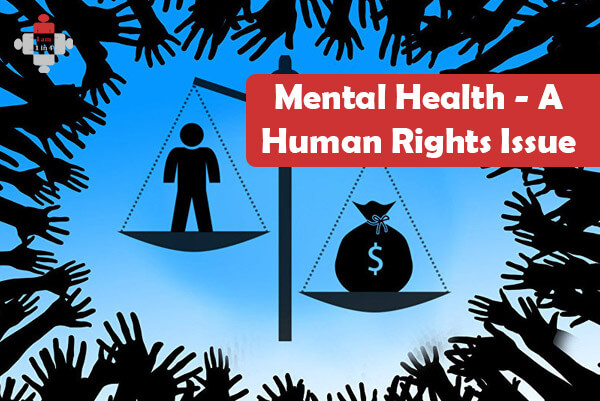
The Scottish Mental Health Law Review has produced an impressive July 2021 interim report. It follows a ‘human rights model’ of disability. It sees the aim of legislation as being to secure human rights, which should be respected, of all those who may currently fall within the category of ‘mental disorder’. It will consider further, including with people with lived experience, about replacing the term ‘mental disorder’ with ‘mental and intellectual disabilities’. Specific mental health and capacity legislation needs to  be reinforced by legislative, policy and practice reform in a wider human rights agenda. Complete removal of compulsion, if it can be achieved, will have to be progressively realised and mental health law reframed to ensure it gives effect to an individual's rights, will and preferences in a non-discriminatory way. Although not straightforward, it should be possible to do this so that it is compliant with the UN Convention on the Rights of People with Disability (UNCRPD) (see eg. previous post). 

I'm pleased to see that Scottish mental health law reform takes UNCRPD into account, whereas I think the review in England and Wales essentially avoided the issue (see previous post). Service users and carers are front and centre of the Scottish review and three people with lived experience are part of the Executive Team, whose work is being intensified before the review is due to complete its work in September 2022.